Niket Kaushik IPS

06Public Service

The citizen at the centre

Almost nobody meets a police force through a major investigation. They meet it at a counter, on a road, at a festival, on a phone call at two in the morning. That is where the relationship is actually made — or lost.

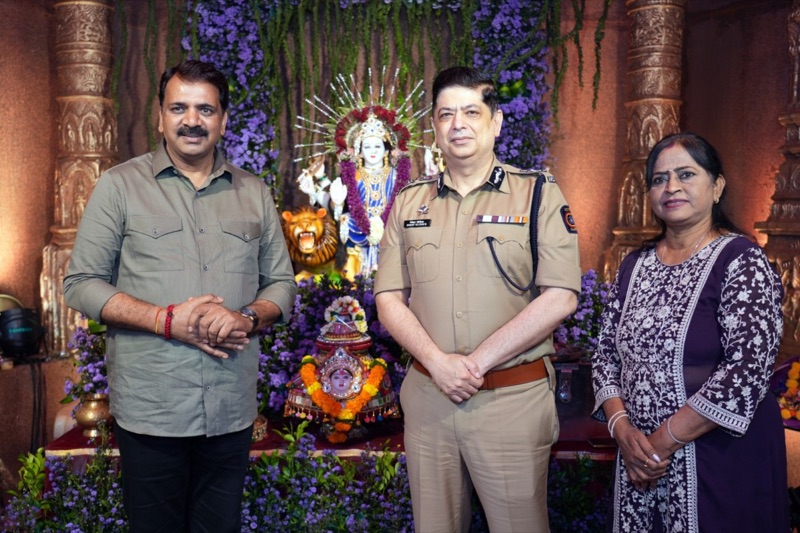
Niket Kaushik, IPS, in uniform at a community festival pandal, standing with two residents in front of a decorated shrine.
Plate 07At a community festival within the jurisdiction. Public festivals are among the largest and most sensitive policing commitments of the year.

01Public Trust

Trust is built in small moments

Confidence in a police force is not established by any single event. It accumulates from a very large number of ordinary interactions, each of which either confirms or undermines what people already believe.

01 · Accessibility

Being reachable

The first test is whether a person can get to the police at all — physically, by phone, online, and in a language they use. A station that is hard to reach or hard to be understood in has already failed a proportion of the people it serves, before any question of competence arises.

02 · Listening

Taking the complaint seriously

Most complaints are small. They are not small to the person making them. Whether somebody is heard properly at the counter determines whether they will come back with something larger — and whether their neighbours will come at all.

03 · Response

Turning up, and saying what happened next

Response time is measured. What is measured less often is whether the complainant was ever told what came of it. An investigation that quietly stops is experienced, from outside, as an institution that did not care.

04 · Dignity

How people are treated in the process

Victims, witnesses, bystanders and the accused are all entitled to be handled lawfully and without humiliation. This is a legal obligation before it is a courtesy, and it is the single behaviour the public generalises from most quickly.

05 · Transparency

Explaining the decision

People will accept an unwelcome decision far more readily when the reason for it is explained. Why a permission was refused, why a road was closed, why a case was filed as it was — stated plainly, in advance where possible.

06 · Grievance

A route when the system fails

Every organisation gets things wrong. What distinguishes a credible one is a functioning, known and used route for saying so — and evidence that using it changes something.

Public engagement

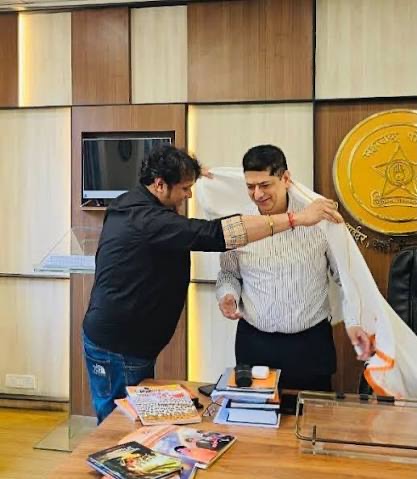
Niket Kaushik being welcomed with a ceremonial shawl by a visitor at his office.
Plate 08Received by a visitor at the office. Ceremonial welcome is a routine part of civic engagement.
Niket Kaushik placing a ceremonial shawl around a guest during a meeting.
Plate 09Meeting a member of the public. Access to a senior officer is itself a form of accountability.

02Citizen Communication

Communication as a policing capability

A police force communicates whether or not it intends to. Its silence is read, its delays are interpreted, and in the absence of an authoritative account, other accounts fill the space very quickly. Treating public communication as a capability rather than an afterthought is therefore an operational decision, not a public-relations one.

In a jurisdiction as linguistically mixed as the Mumbai Metropolitan Region, this has a practical dimension. An advisory issued in one language reaches a fraction of the people it concerns. A complaint recorded in a language the complainant does not command loses detail that may matter later. Communication capacity is the difference between an instruction being issued and an instruction being received.
  1. Multilingual interaction. Being able to take a statement, ask a follow-up question and give an instruction in the language the other person actually thinks in.
  2. Public advisories. Traffic diversions, event arrangements, closures and safety warnings, issued early enough and widely enough to change behaviour.
  3. Awareness. Sustained information on the offences the public can protect itself against — particularly fraud, which depends almost entirely on the victim's own action.
  4. Emergency information. A single authoritative account during an incident, corrected openly when it changes, so that rumour has less room to operate.
  5. Community confidence. Regular, unremarkable contact with residents' associations, traders, transport operators, schools and places of worship — before anything goes wrong.

Note. This section describes established principles of public-facing policing. No statement, remark or initiative is attributed to Niket Kaushik here unless it appears elsewhere on this site with a source. No quotation is used.

Next

The record

Awards and professional recognition, in official terminology, with the year and occasion each was conferred.

Recognition